Compare commits
2 commits
11e1f0b46b
...
0664591b57
| Author | SHA1 | Date | |
|---|---|---|---|
| 0664591b57 | |||
| 9f28f979d6 |

14 changed files with 1253 additions and 12 deletions
64
README.md
64
README.md
|
|
@ -2,14 +2,14 @@
|
|||
|
||||
# 📦 devbox
|
||||
|
||||
### Your working tree, everywhere. Now with built-in Tailscale. 🔒
|
||||
### Your working tree, everywhere. Built-in Tailscale. Built-in MCP. 🔒
|
||||
|
||||
Continuous file sync for developers: private networking, selective mounts,
|
||||
conflict copies, snapshot history, and a secret guard that keeps credentials home.
|
||||
conflict copies, snapshot history, and structured tools for your AI coding agent.
|
||||
|
||||
**Linux · macOS · Windows · Raspberry Pi**
|
||||
|
||||
[Install](#-install) · [Tailscale quick start](#-tailscale-quick-start) · [Commands](#-commands) · [Configuration](#-configuration) · [Build](#-build-and-release)
|
||||
[Install](#-install) · [Tailscale quick start](#-tailscale-quick-start) · [Agent MCP](#-built-in-mcp-for-agents) · [Commands](#-commands) · [Configuration](#-configuration) · [Build](#-build-and-release)
|
||||
|
||||
</div>
|
||||
|
||||
|
|
@ -26,6 +26,10 @@ router port forwarding, or reverse proxy is required for this mode.
|
|||
devbox-hub serve --data ./hub-data --tailscale --tailscale-hostname devbox-hub
|
||||
```
|
||||
|
||||

|
||||
|
||||
*Actual CLI help, rendered for readability. The hub joins the tailnet itself.*
|
||||
|
||||
On first launch, open the authentication URL printed in the terminal. Once
|
||||
connected, the hub prints its private endpoint:
|
||||
|
||||
|
|
@ -44,6 +48,52 @@ uses the private URL through that connection. Embedded client networking is not
|
|||
included in this release. The embedded hub is a separate Tailscale device, even
|
||||
if its host machine already runs Tailscale.
|
||||
|
||||
## 🤖 Built-in MCP for agents
|
||||
|
||||
**New in v2.2.0:** connect your coding agent directly to devbox with the built-in
|
||||
Model Context Protocol server. It ships in the same client binary:
|
||||
|
||||
```bash
|
||||
codex mcp add devbox -- /absolute/path/to/devbox mcp
|
||||
```
|
||||
|
||||
Or configure any agent that accepts `mcpServers` JSON:
|
||||
|
||||
```json
|
||||
{
|
||||
"mcpServers": {
|
||||
"devbox": {
|
||||
"command": "/absolute/path/to/devbox",
|
||||
"args": ["mcp"]
|
||||
}
|
||||
}
|
||||
}
|
||||
```
|
||||
|
||||

|
||||
|
||||
*Captured from the built-in stdio server using an isolated enrolled device.*
|
||||
|
||||
Ask your agent to check sync status, diagnose a failing mount, inspect history,
|
||||
or list conflicts. Default tools inspect the existing enrolled device.
|
||||
`--allow-writes` enables pause/resume, publish, and mount;
|
||||
`--allow-writes --allow-destructive` additionally enables restore, deploy, and
|
||||
unmount. Tools use the CLI's authentication and conflict behavior.
|
||||
|
||||
**Tailscale connects your machines; MCP connects your agent.** The hub embeds
|
||||
Tailscale, client machines use their regular Tailscale connection, and the MCP
|
||||
server talks locally over stdio. No extra MCP service or Node runtime is needed.
|
||||
|
||||
```mermaid
|
||||
flowchart LR
|
||||
Agent["AI coding agent"] -->|"local stdio"| MCP["devbox mcp"]
|
||||
MCP --> Client["Enrolled devbox client"]
|
||||
Client -->|"regular Tailscale app"| Hub["Hub with embedded Tailscale"]
|
||||
```
|
||||
|
||||
Read the [MCP setup guide](docs/MCP.md) for tool names, configuration, execution
|
||||
limits, and errors, or the [implementation plan](docs/MCP-PLAN.md) for scope.
|
||||
|
||||
## ✨ Why devbox?
|
||||
|
||||
Git records the work you choose to commit. devbox continuously mirrors the
|
||||
|
|
@ -200,6 +250,7 @@ probes the host-network API, so it must be replaced for tailnet-only mode.
|
|||
|
||||
| Client command | Purpose |
|
||||
|---|---|
|
||||
| `devbox mcp` | Serve structured agent tools over local stdio |
|
||||
| `devbox setup` | Interactive first-run setup |
|
||||
| `devbox join <hub> <token>` | Enroll this device |
|
||||
| `devbox publish <localdir> <share>` | Create a share and push its files |
|
||||
|
|
@ -226,7 +277,10 @@ planned, so use a hub for a trusted group rather than mutually untrusted tenants
|
|||
|
||||
## 📊 Built-in dashboard
|
||||
|
||||
<p align="center"><img src="docs/images/dashboard.png" alt="devbox live sync dashboard" width="860"></p>
|
||||
<p align="center"><img src="docs/images/dashboard.png" alt="Live devbox dashboard showing three devices and three demo shares" width="1000"></p>
|
||||
|
||||
*Live hub dashboard with isolated demo data. The capture uses a local hub; it is
|
||||
not evidence of production Tailscale enrollment.*
|
||||
|
||||
```bash
|
||||
devbox-hub serve --data ./hub-data --tailscale --dashboard
|
||||
|
|
@ -288,7 +342,7 @@ pinned Tailscale dependency. Downloading prebuilt binaries needs no Go toolchain
|
|||
go build ./cmd/devbox ./cmd/devbox-hub
|
||||
go vet ./...
|
||||
go test -race ./...
|
||||
VERSION=v2.1.0 ./scripts/build-release.sh
|
||||
VERSION=v2.2.0 ./scripts/build-release.sh
|
||||
```
|
||||
|
||||
The release script cross-compiles both binaries for six platform/architecture
|
||||
|
|
|
|||
|
|
@ -64,6 +64,7 @@ func main() {
|
|||
doctorCmd(),
|
||||
setupCmd(),
|
||||
versionCmd(),
|
||||
mcpCmd(),
|
||||
)
|
||||
// First run: on a bare `devbox` (no subcommand) on a terminal, offer the setup
|
||||
// wizard if this machine isn't joined yet and the user hasn't opted out.
|
||||
|
|
@ -313,11 +314,15 @@ func writeJSON(w io.Writer, v any) error {
|
|||
|
||||
func logCmd() *cobra.Command {
|
||||
var asJSON bool
|
||||
var limit int
|
||||
cmd := &cobra.Command{
|
||||
Use: "log <share>",
|
||||
Short: "🕓 show a share's snapshot history",
|
||||
Args: cobra.ExactArgs(1),
|
||||
RunE: func(cmd *cobra.Command, args []string) error {
|
||||
if limit < 1 || limit > 100 {
|
||||
return fmt.Errorf("limit must be between 1 and 100")
|
||||
}
|
||||
share := args[0]
|
||||
dir, err := config.Dir()
|
||||
if err != nil {
|
||||
|
|
@ -336,6 +341,9 @@ func logCmd() *cobra.Command {
|
|||
if err != nil {
|
||||
return err
|
||||
}
|
||||
if len(snaps) > limit {
|
||||
snaps = snaps[:limit]
|
||||
}
|
||||
out := cmd.OutOrStdout()
|
||||
if asJSON {
|
||||
return writeJSON(out, snaps)
|
||||
|
|
@ -348,6 +356,7 @@ func logCmd() *cobra.Command {
|
|||
},
|
||||
}
|
||||
cmd.Flags().BoolVar(&asJSON, "json", false, "emit machine-readable JSON")
|
||||
cmd.Flags().IntVar(&limit, "limit", 100, "maximum snapshots (1-100)")
|
||||
return cmd
|
||||
}
|
||||
|
||||
|
|
@ -1068,15 +1077,18 @@ func doctorCmd() *cobra.Command {
|
|||
}
|
||||
|
||||
// fsnotify watcher (catches inotify exhaustion on Linux).
|
||||
probe := filepath.Join(os.TempDir(), "devbox-doctor-watch")
|
||||
_ = os.MkdirAll(probe, 0o755)
|
||||
if w, err := watch.New(probe, 100*time.Millisecond); err != nil {
|
||||
check(false, false, "file watcher", err.Error())
|
||||
probe, probeErr := os.MkdirTemp("", "devbox-doctor-watch-")
|
||||
if probeErr != nil {
|
||||
check(false, false, "file watcher", probeErr.Error())
|
||||
} else {
|
||||
w.Close()
|
||||
check(true, false, "file watcher", "fsnotify ok")
|
||||
if w, err := watch.New(probe, 100*time.Millisecond); err != nil {
|
||||
check(false, false, "file watcher", err.Error())
|
||||
} else {
|
||||
w.Close()
|
||||
check(true, false, "file watcher", "fsnotify ok")
|
||||
}
|
||||
_ = os.RemoveAll(probe)
|
||||
}
|
||||
_ = os.RemoveAll(probe)
|
||||
|
||||
// macOS Full Disk Access — needed to sync TCC-protected folders
|
||||
// (~/Desktop, ~/Documents, ~/Downloads, iCloud). A background daemon
|
||||
|
|
|
|||
337
cmd/devbox/mcp.go
Normal file
337
cmd/devbox/mcp.go
Normal file
|
|
@ -0,0 +1,337 @@
|
|||
package main
|
||||
|
||||
import (
|
||||
"bytes"
|
||||
"context"
|
||||
"encoding/json"
|
||||
"fmt"
|
||||
"os"
|
||||
"os/exec"
|
||||
"path/filepath"
|
||||
"regexp"
|
||||
"strings"
|
||||
"time"
|
||||
"unicode"
|
||||
|
||||
"github.com/modelcontextprotocol/go-sdk/mcp"
|
||||
"github.com/spf13/cobra"
|
||||
)
|
||||
|
||||
const mcpOutputLimit = 1 << 20
|
||||
const mcpStderrLimit = 64 << 10
|
||||
|
||||
func mcpCmd() *cobra.Command {
|
||||
var writes, destructive bool
|
||||
var timeout time.Duration
|
||||
cmd := &cobra.Command{
|
||||
Use: "mcp", Short: "serve MCP tools over stdin/stdout (inspection only by default)", Args: cobra.NoArgs,
|
||||
RunE: func(cmd *cobra.Command, _ []string) error {
|
||||
if destructive && !writes {
|
||||
return fmt.Errorf("--allow-destructive requires --allow-writes")
|
||||
}
|
||||
if timeout <= 0 {
|
||||
return fmt.Errorf("--command-timeout must be positive")
|
||||
}
|
||||
executable, err := os.Executable()
|
||||
if err != nil {
|
||||
return err
|
||||
}
|
||||
return newMCPServer(executable, writes, destructive, timeout).Run(cmd.Context(), &mcp.StdioTransport{})
|
||||
},
|
||||
}
|
||||
cmd.Flags().BoolVar(&writes, "allow-writes", false, "expose pause, resume, publish, and mount")
|
||||
cmd.Flags().BoolVar(&destructive, "allow-destructive", false, "also expose restore, deploy, and unmount (requires --allow-writes)")
|
||||
cmd.Flags().DurationVar(&timeout, "command-timeout", 2*time.Minute, "positive timeout for each tool command, including queue time")
|
||||
return cmd
|
||||
}
|
||||
|
||||
type mcpArguments struct {
|
||||
Share string `json:"share"`
|
||||
LocalDir string `json:"local_dir"`
|
||||
Snapshot string `json:"snapshot"`
|
||||
Path string `json:"path"`
|
||||
ReadOnly bool `json:"read_only"`
|
||||
Exclude []string `json:"exclude"`
|
||||
Duration string `json:"duration"`
|
||||
Limit *int `json:"limit"`
|
||||
}
|
||||
|
||||
type mcpCommandResult struct {
|
||||
Stdout string `json:"stdout"`
|
||||
Stderr string `json:"stderr"`
|
||||
ExitCode int `json:"exit_code"`
|
||||
Truncated bool `json:"truncated"`
|
||||
Data any `json:"data,omitempty"`
|
||||
Error string `json:"error,omitempty"`
|
||||
}
|
||||
|
||||
type mcpToolSpec struct {
|
||||
name, description string
|
||||
fields, required []string
|
||||
write, destructive, idempotent, openWorld bool
|
||||
}
|
||||
|
||||
func newMCPServer(executable string, writes, destructive bool, timeout time.Duration) *mcp.Server {
|
||||
server := mcp.NewServer(&mcp.Implementation{Name: "devbox", Version: version}, nil)
|
||||
// CLI config/state updates are atomic files, but not multi-process transactions.
|
||||
// Serialize calls in this server to avoid two mutating children losing updates.
|
||||
gate := make(chan struct{}, 1)
|
||||
specs := []mcpToolSpec{
|
||||
{name: "status", description: "Inspect enrollment, mounts, and running daemon state. Does not test hub connectivity.", idempotent: true},
|
||||
{name: "doctor", description: "Diagnose enrollment, hub connectivity, mounts, and watcher. Failed checks remain in data with isError=true.", idempotent: true, openWorld: true},
|
||||
{name: "conflicts", description: "List conflict copies across configured mounts; never deletes files.", idempotent: true},
|
||||
{name: "history", description: "Get the newest share snapshots, bounded by limit (default 20; maximum 100).", fields: []string{"share", "limit"}, required: []string{"share"}, idempotent: true, openWorld: true},
|
||||
{name: "members", description: "List share members and roles using the enrolled device's access.", fields: []string{"share"}, required: []string{"share"}, idempotent: true, openWorld: true},
|
||||
{name: "pause", description: "Pause the running sync daemon. Optional positive duration auto-resumes it; omitted means until resume.", fields: []string{"duration"}, write: true, idempotent: false},
|
||||
{name: "resume", description: "Resume the running sync daemon and catch up configured mounts.", write: true, idempotent: true, openWorld: true},
|
||||
{name: "publish", description: "Create a hub share and upload a local directory with the existing secret guard. Does not configure a mount.", fields: []string{"share", "local_dir"}, required: []string{"share", "local_dir"}, write: true, openWorld: true},
|
||||
{name: "mount", description: "Clone and sync a share or share/subpath into a local directory; may merge local files and push changes unless read_only=true. Replaces that mount's configuration and clears its pin. Review conflicts after mounting.", fields: []string{"share", "local_dir", "read_only", "exclude"}, required: []string{"share", "local_dir"}, write: true, destructive: true, openWorld: true},
|
||||
{name: "restore", description: "Restore a mounted share or relative path from a snapshot, modifying local files and publishing a new head.", fields: []string{"share", "snapshot", "path"}, required: []string{"share", "snapshot"}, write: true, destructive: true, openWorld: true},
|
||||
{name: "deploy", description: "Rewrite a mount to a snapshot without pushing, then pin it against live advancement.", fields: []string{"share", "snapshot"}, required: []string{"share", "snapshot"}, write: true, destructive: true, idempotent: true, openWorld: true},
|
||||
{name: "unmount", description: "Remove a share's mount configuration and sync state. Files remain on disk.", fields: []string{"share"}, required: []string{"share"}, write: true, destructive: true},
|
||||
}
|
||||
for _, spec := range specs {
|
||||
if spec.write && !writes {
|
||||
continue
|
||||
}
|
||||
// mount is available with writes as planned, but accurately advertises its
|
||||
// existing merge/config-replacement behavior as potentially destructive.
|
||||
if (spec.name == "restore" || spec.name == "deploy" || spec.name == "unmount") && !destructive {
|
||||
continue
|
||||
}
|
||||
props := map[string]any{}
|
||||
for _, field := range spec.fields {
|
||||
props[field] = mcpFieldSchema(field, spec.name)
|
||||
}
|
||||
schema := map[string]any{"type": "object", "properties": props, "additionalProperties": false}
|
||||
if len(spec.required) > 0 {
|
||||
schema["required"] = spec.required
|
||||
}
|
||||
server.AddTool(&mcp.Tool{
|
||||
Name: "devbox_" + spec.name, Description: spec.description, InputSchema: schema,
|
||||
OutputSchema: map[string]any{"type": "object", "properties": map[string]any{
|
||||
"stdout": map[string]any{"type": "string"}, "stderr": map[string]any{"type": "string"},
|
||||
"exit_code": map[string]any{"type": "integer"}, "truncated": map[string]any{"type": "boolean"},
|
||||
"data": map[string]any{"description": "Parsed CLI JSON, when complete and valid (object or array)."}, "error": map[string]any{"type": "string"},
|
||||
}, "required": []string{"stdout", "stderr", "exit_code", "truncated"}, "additionalProperties": false},
|
||||
Annotations: &mcp.ToolAnnotations{ReadOnlyHint: !spec.write, DestructiveHint: &spec.destructive, IdempotentHint: spec.idempotent, OpenWorldHint: &spec.openWorld},
|
||||
}, func(ctx context.Context, req *mcp.CallToolRequest) (*mcp.CallToolResult, error) {
|
||||
args, err := mcpCommandArgs(spec, req.Params.Arguments)
|
||||
if err != nil {
|
||||
return mcpResult(mcpCommandResult{ExitCode: -1, Error: err.Error()}), nil
|
||||
}
|
||||
ctx, cancel := context.WithTimeout(ctx, timeout)
|
||||
defer cancel()
|
||||
select {
|
||||
case gate <- struct{}{}:
|
||||
defer func() { <-gate }()
|
||||
case <-ctx.Done():
|
||||
return mcpResult(mcpCommandResult{ExitCode: -1, Error: ctx.Err().Error()}), nil
|
||||
}
|
||||
return mcpResult(runMCPCommand(ctx, executable, args)), nil
|
||||
})
|
||||
}
|
||||
return server
|
||||
}
|
||||
|
||||
func mcpFieldSchema(field, tool string) map[string]any {
|
||||
switch field {
|
||||
case "limit":
|
||||
return map[string]any{"type": "integer", "minimum": 1, "maximum": 100, "default": 20, "description": "Maximum newest snapshots to return."}
|
||||
case "read_only":
|
||||
return map[string]any{"type": "boolean", "default": false, "description": "Pull only; never push local files."}
|
||||
case "exclude":
|
||||
return map[string]any{"type": "array", "maxItems": 100, "items": map[string]any{"type": "string", "minLength": 1, "maxLength": 4096}, "description": "Device-local gitignore patterns layered over .devignore."}
|
||||
case "local_dir":
|
||||
return map[string]any{"type": "string", "minLength": 1, "maxLength": 4096, "description": "Absolute local directory path. Shell characters are literal; no expansion."}
|
||||
case "snapshot":
|
||||
return map[string]any{"type": "string", "pattern": "^[a-f0-9]{64}$", "description": "Full 64-character snapshot ID from devbox_history."}
|
||||
case "duration":
|
||||
return map[string]any{"type": "string", "minLength": 1, "maxLength": 128, "description": "Positive Go duration, e.g. 30m or 2h; omitted pauses until resume."}
|
||||
case "path":
|
||||
return map[string]any{"type": "string", "minLength": 1, "maxLength": 4096, "description": "Relative forward-slash file path within the share; no dot or parent components."}
|
||||
default:
|
||||
desc := "Share name (letters, digits, dots, underscores, hyphens; no leading dot or hyphen)."
|
||||
if tool == "mount" {
|
||||
desc += " Optionally append /relative/subpath."
|
||||
}
|
||||
return map[string]any{"type": "string", "minLength": 1, "maxLength": 4096, "description": desc}
|
||||
}
|
||||
}
|
||||
|
||||
var mcpSharePattern = regexp.MustCompile(`^[A-Za-z0-9][A-Za-z0-9._-]{0,127}$`)
|
||||
var mcpSnapshotPattern = regexp.MustCompile(`^[a-f0-9]{64}$`)
|
||||
|
||||
func mcpCommandArgs(spec mcpToolSpec, raw json.RawMessage) ([]string, error) {
|
||||
if len(raw) == 0 {
|
||||
raw = []byte("{}")
|
||||
}
|
||||
var fields map[string]json.RawMessage
|
||||
if err := json.Unmarshal(raw, &fields); err != nil || fields == nil {
|
||||
return nil, fmt.Errorf("arguments must be an object")
|
||||
}
|
||||
allowed := map[string]bool{}
|
||||
for _, k := range spec.fields {
|
||||
allowed[k] = true
|
||||
}
|
||||
for k, v := range fields {
|
||||
if !allowed[k] {
|
||||
return nil, fmt.Errorf("unknown argument %q", k)
|
||||
}
|
||||
if bytes.Equal(bytes.TrimSpace(v), []byte("null")) {
|
||||
return nil, fmt.Errorf("%s must not be null", k)
|
||||
}
|
||||
}
|
||||
for _, k := range spec.required {
|
||||
if _, ok := fields[k]; !ok {
|
||||
return nil, fmt.Errorf("%s is required", k)
|
||||
}
|
||||
}
|
||||
var a mcpArguments
|
||||
if err := json.Unmarshal(raw, &a); err != nil {
|
||||
return nil, fmt.Errorf("invalid arguments: %w", err)
|
||||
}
|
||||
for k, v := range map[string]string{"share": a.Share, "local_dir": a.LocalDir, "snapshot": a.Snapshot, "path": a.Path, "duration": a.Duration} {
|
||||
if _, ok := fields[k]; ok && (v == "" || len(v) > 4096 || strings.IndexFunc(v, unicode.IsControl) >= 0) {
|
||||
return nil, fmt.Errorf("%s must be nonempty, at most 4096 bytes, and contain no control characters", k)
|
||||
}
|
||||
}
|
||||
if a.Share != "" {
|
||||
share, sub := splitShare(a.Share)
|
||||
if !mcpSharePattern.MatchString(share) || strings.HasSuffix(share, ".") {
|
||||
return nil, fmt.Errorf("invalid share name")
|
||||
}
|
||||
if strings.Contains(a.Share, "/") && (spec.name != "mount" || !mcpRelativePath(sub)) {
|
||||
return nil, fmt.Errorf("only mount accepts share/subpath; subpath must be a safe relative path")
|
||||
}
|
||||
}
|
||||
if a.LocalDir != "" && !filepath.IsAbs(a.LocalDir) {
|
||||
return nil, fmt.Errorf("local_dir must be an absolute path")
|
||||
}
|
||||
if a.Snapshot != "" && !mcpSnapshotPattern.MatchString(a.Snapshot) {
|
||||
return nil, fmt.Errorf("snapshot must be a full lowercase 64-character hex ID")
|
||||
}
|
||||
if a.Path != "" && !mcpRelativePath(a.Path) {
|
||||
return nil, fmt.Errorf("path must be relative without dot or parent components")
|
||||
}
|
||||
if a.Duration != "" {
|
||||
d, err := time.ParseDuration(a.Duration)
|
||||
if err != nil || d <= 0 || len(a.Duration) > 128 {
|
||||
return nil, fmt.Errorf("duration must be a positive Go duration, e.g. 30m")
|
||||
}
|
||||
}
|
||||
if len(a.Exclude) > 100 {
|
||||
return nil, fmt.Errorf("exclude supports at most 100 patterns")
|
||||
}
|
||||
for _, p := range a.Exclude {
|
||||
if p == "" || len(p) > 4096 || strings.IndexFunc(p, unicode.IsControl) >= 0 {
|
||||
return nil, fmt.Errorf("invalid exclude pattern")
|
||||
}
|
||||
}
|
||||
command := spec.name
|
||||
if command == "history" {
|
||||
command = "log"
|
||||
}
|
||||
args := []string{command}
|
||||
switch spec.name {
|
||||
case "status", "doctor", "conflicts":
|
||||
args = append(args, "--json")
|
||||
case "history":
|
||||
limit := 20
|
||||
if a.Limit != nil {
|
||||
limit = *a.Limit
|
||||
}
|
||||
if limit < 1 || limit > 100 {
|
||||
return nil, fmt.Errorf("limit must be between 1 and 100")
|
||||
}
|
||||
args = append(args, "--json", fmt.Sprintf("--limit=%d", limit))
|
||||
case "pause":
|
||||
if a.Duration != "" {
|
||||
args = append(args, "--for="+a.Duration)
|
||||
}
|
||||
case "mount":
|
||||
if a.ReadOnly {
|
||||
args = append(args, "--ro")
|
||||
}
|
||||
for _, p := range a.Exclude {
|
||||
args = append(args, "--exclude="+p)
|
||||
}
|
||||
}
|
||||
args = append(args, "--")
|
||||
switch spec.name {
|
||||
case "history", "members", "unmount":
|
||||
args = append(args, a.Share)
|
||||
case "publish":
|
||||
args = append(args, a.LocalDir, a.Share)
|
||||
case "mount":
|
||||
args = append(args, a.Share, a.LocalDir)
|
||||
case "restore", "deploy":
|
||||
args = append(args, a.Share, a.Snapshot)
|
||||
if a.Path != "" {
|
||||
args = append(args, a.Path)
|
||||
}
|
||||
}
|
||||
return args, nil
|
||||
}
|
||||
|
||||
func mcpRelativePath(p string) bool {
|
||||
if p == "" || strings.HasPrefix(p, "-") || strings.ContainsAny(p, `\:`) || strings.IndexFunc(p, unicode.IsControl) >= 0 {
|
||||
return false
|
||||
}
|
||||
for _, part := range strings.Split(p, "/") {
|
||||
if part == "" || part == "." || part == ".." {
|
||||
return false
|
||||
}
|
||||
}
|
||||
return true
|
||||
}
|
||||
|
||||
// Keep draining after the cap so a noisy child cannot deadlock on a full pipe.
|
||||
type mcpCapture struct {
|
||||
buffer bytes.Buffer
|
||||
limit int
|
||||
truncated bool
|
||||
}
|
||||
|
||||
func (b *mcpCapture) Write(p []byte) (int, error) {
|
||||
n := len(p)
|
||||
if len(p) > b.limit-b.buffer.Len() {
|
||||
p = p[:b.limit-b.buffer.Len()]
|
||||
b.truncated = true
|
||||
}
|
||||
_, _ = b.buffer.Write(p)
|
||||
return n, nil
|
||||
}
|
||||
|
||||
func runMCPCommand(ctx context.Context, executable string, args []string) mcpCommandResult {
|
||||
out, stderr := &mcpCapture{limit: mcpOutputLimit}, &mcpCapture{limit: mcpStderrLimit}
|
||||
cmd := exec.CommandContext(ctx, executable, args...)
|
||||
cmd.Stdout, cmd.Stderr = out, stderr
|
||||
cmd.Stdin = nil // Commands must never prompt or consume MCP protocol input.
|
||||
cmd.WaitDelay = time.Second
|
||||
err := cmd.Run()
|
||||
result := mcpCommandResult{Stdout: strings.ToValidUTF8(out.buffer.String(), ""), Stderr: strings.ToValidUTF8(stderr.buffer.String(), ""), Truncated: out.truncated || stderr.truncated}
|
||||
if err != nil {
|
||||
result.ExitCode = -1
|
||||
if cmd.ProcessState != nil {
|
||||
result.ExitCode = cmd.ProcessState.ExitCode()
|
||||
}
|
||||
result.Error = err.Error()
|
||||
}
|
||||
if ctx.Err() != nil {
|
||||
result.Error = ctx.Err().Error() + "; completed side effects are not rolled back; inspect state before retrying"
|
||||
}
|
||||
if !out.truncated {
|
||||
var data any
|
||||
if json.Unmarshal(out.buffer.Bytes(), &data) == nil {
|
||||
result.Data = data
|
||||
}
|
||||
}
|
||||
return result
|
||||
}
|
||||
|
||||
func mcpResult(result mcpCommandResult) *mcp.CallToolResult {
|
||||
// Emit the same envelope as text for clients without structured-content support.
|
||||
data, _ := json.Marshal(result)
|
||||
return &mcp.CallToolResult{IsError: result.Error != "", StructuredContent: result, Content: []mcp.Content{&mcp.TextContent{Text: string(data)}}}
|
||||
}
|
||||
545
cmd/devbox/mcp_test.go
Normal file
545
cmd/devbox/mcp_test.go
Normal file
|
|
@ -0,0 +1,545 @@
|
|||
package main
|
||||
|
||||
import (
|
||||
"bytes"
|
||||
"context"
|
||||
"encoding/json"
|
||||
"fmt"
|
||||
"net/http"
|
||||
"net/http/httptest"
|
||||
"os"
|
||||
"os/exec"
|
||||
"path/filepath"
|
||||
"runtime"
|
||||
"strings"
|
||||
"testing"
|
||||
"time"
|
||||
|
||||
"github.com/modelcontextprotocol/go-sdk/mcp"
|
||||
"github.com/shoemoney/devbox/internal/config"
|
||||
"github.com/shoemoney/devbox/internal/control"
|
||||
"github.com/shoemoney/devbox/internal/daemon"
|
||||
"github.com/shoemoney/devbox/internal/hub"
|
||||
"github.com/shoemoney/devbox/internal/hub/blobstore"
|
||||
"github.com/shoemoney/devbox/internal/hub/meta"
|
||||
"github.com/shoemoney/devbox/internal/identity"
|
||||
"github.com/shoemoney/devbox/internal/ignore"
|
||||
"github.com/shoemoney/devbox/internal/secret"
|
||||
"github.com/shoemoney/devbox/internal/syncer"
|
||||
"github.com/shoemoney/devbox/internal/transport"
|
||||
"github.com/shoemoney/devbox/pkg/proto"
|
||||
)
|
||||
|
||||
// DEVBOX_MCP_TEST_BINARY reruns these protocol checks against a packaged binary.
|
||||
// Otherwise build the actual command with the race detector, not a test shim.
|
||||
func TestMCPStdio(t *testing.T) {
|
||||
binary := os.Getenv("DEVBOX_MCP_TEST_BINARY")
|
||||
if binary == "" {
|
||||
binary = filepath.Join(t.TempDir(), "devbox")
|
||||
if runtime.GOOS == "windows" {
|
||||
binary += ".exe"
|
||||
}
|
||||
build := exec.Command("go", "build", "-race", "-o", binary, ".")
|
||||
if out, err := build.CombinedOutput(); err != nil {
|
||||
t.Fatalf("build actual binary: %v\n%s", err, out)
|
||||
}
|
||||
}
|
||||
t.Run("permissions-and-errors", func(t *testing.T) {
|
||||
for _, mode := range []struct {
|
||||
flags []string
|
||||
count int
|
||||
}{{nil, 5}, {[]string{"--allow-writes"}, 9}, {[]string{"--allow-writes", "--allow-destructive"}, 12}} {
|
||||
t.Run(fmt.Sprint(mode.count), func(t *testing.T) {
|
||||
cfg := t.TempDir()
|
||||
cs := mcpTestClient(t, binary, cfg, mode.flags...)
|
||||
listed, err := cs.ListTools(t.Context(), nil)
|
||||
if err != nil {
|
||||
t.Fatal(err)
|
||||
}
|
||||
if len(listed.Tools) != mode.count {
|
||||
t.Fatalf("tool count %d, want %d", len(listed.Tools), mode.count)
|
||||
}
|
||||
names := map[string]bool{}
|
||||
for _, tool := range listed.Tools {
|
||||
names[tool.Name] = true
|
||||
if tool.InputSchema == nil || tool.OutputSchema == nil || tool.Annotations == nil {
|
||||
t.Fatalf("missing schema/annotations: %s", tool.Name)
|
||||
}
|
||||
read := tool.Name == "devbox_status" || tool.Name == "devbox_doctor" || tool.Name == "devbox_conflicts" || tool.Name == "devbox_history" || tool.Name == "devbox_members"
|
||||
if tool.Annotations.ReadOnlyHint != read {
|
||||
t.Fatalf("wrong read annotation: %s", tool.Name)
|
||||
}
|
||||
}
|
||||
for _, name := range []string{"devbox_status", "devbox_doctor", "devbox_conflicts", "devbox_history", "devbox_members"} {
|
||||
if !names[name] {
|
||||
t.Fatalf("missing %s", name)
|
||||
}
|
||||
}
|
||||
for _, name := range []string{"devbox_pause", "devbox_resume", "devbox_publish", "devbox_mount"} {
|
||||
if names[name] != (mode.count >= 9) {
|
||||
t.Fatalf("bad gating %s", name)
|
||||
}
|
||||
}
|
||||
for _, name := range []string{"devbox_restore", "devbox_deploy", "devbox_unmount"} {
|
||||
if names[name] != (mode.count == 12) {
|
||||
t.Fatalf("bad gating %s", name)
|
||||
}
|
||||
}
|
||||
got := mcpCall(t, cs, "status", nil, false)
|
||||
var status statusJSON
|
||||
mcpData(t, got, &status)
|
||||
if status.Joined {
|
||||
t.Fatal("fabricated enrollment")
|
||||
}
|
||||
doctor := mcpCall(t, cs, "doctor", nil, true)
|
||||
var checks []struct{ Name, Status, Detail string }
|
||||
mcpData(t, doctor, &checks)
|
||||
if doctor.ExitCode == 0 || len(checks) != 1 || checks[0].Name != "identity" || checks[0].Status != "fail" {
|
||||
t.Fatalf("lost failed diagnostics: %+v", doctor)
|
||||
}
|
||||
mcpCall(t, cs, "conflicts", nil, false)
|
||||
mcpCall(t, cs, "history", map[string]any{"share": "demo"}, true)
|
||||
if mode.count == 5 {
|
||||
for _, name := range []string{"pause", "resume", "publish", "mount", "restore", "deploy", "unmount"} {
|
||||
_, err := cs.CallTool(t.Context(), &mcp.CallToolParams{Name: "devbox_" + name, Arguments: map[string]any{}})
|
||||
if err == nil {
|
||||
t.Fatalf("disabled tool callable: %s", name)
|
||||
}
|
||||
}
|
||||
}
|
||||
// A command error must leave stdout readable as protocol traffic.
|
||||
mcpCall(t, cs, "status", nil, false)
|
||||
})
|
||||
}
|
||||
for _, flags := range [][]string{{"--allow-destructive"}, {"--command-timeout=0s"}, {"--command-timeout=-1s"}} {
|
||||
cmd := exec.Command(binary, append([]string{"mcp"}, flags...)...)
|
||||
cmd.Env = mcpTestEnv(t.TempDir())
|
||||
var stdout, stderr bytes.Buffer
|
||||
cmd.Stdout = &stdout
|
||||
cmd.Stderr = &stderr
|
||||
if err := cmd.Run(); err == nil || stdout.Len() != 0 || stderr.Len() == 0 {
|
||||
t.Fatalf("invalid flags accepted or stdout polluted: %v", flags)
|
||||
}
|
||||
}
|
||||
})
|
||||
t.Run("input-validation", func(t *testing.T) {
|
||||
cs := mcpTestClient(t, binary, t.TempDir(), "--allow-writes", "--allow-destructive")
|
||||
for _, tc := range []struct {
|
||||
name string
|
||||
args any
|
||||
}{
|
||||
{"status", map[string]any{"command": "whoami"}},
|
||||
{"conflicts", map[string]any{"rm": true}},
|
||||
{"history", map[string]any{"share": "--help"}},
|
||||
{"history", map[string]any{"share": "demo; touch /tmp/unwanted"}},
|
||||
{"history", map[string]any{"share": "demo", "limit": 0}},
|
||||
{"history", map[string]any{"share": "demo", "limit": 101}},
|
||||
{"history", map[string]any{"share": "demo", "limit": 1.5}},
|
||||
{"history", map[string]any{"share": "demo", "limit": nil}},
|
||||
{"history", map[string]any{}},
|
||||
{"history", map[string]any{"share": "demo/sub"}},
|
||||
{"mount", map[string]any{"share": "demo/../escape", "local_dir": t.TempDir()}},
|
||||
{"mount", map[string]any{"share": "demo", "local_dir": "--help"}},
|
||||
{"mount", map[string]any{"share": "demo", "local_dir": t.TempDir(), "read_only": "true"}},
|
||||
{"mount", map[string]any{"share": "demo", "local_dir": t.TempDir(), "exclude": []string{"x\n--help"}}},
|
||||
{"publish", map[string]any{"share": "demo", "local_dir": "relative"}},
|
||||
{"pause", map[string]any{"duration": "-1s"}},
|
||||
{"pause", map[string]any{"duration": "1s --help"}},
|
||||
{"restore", map[string]any{"share": "demo", "snapshot": "--help"}},
|
||||
{"restore", map[string]any{"share": "demo", "snapshot": strings.Repeat("a", 64), "path": "../escape"}},
|
||||
{"deploy", map[string]any{"share": "demo", "snapshot": strings.Repeat("a", 64), "path": "file"}},
|
||||
{"unmount", map[string]any{"share": "demo\x00evil"}},
|
||||
} {
|
||||
r := mcpCall(t, cs, tc.name, tc.args, true)
|
||||
if r.ExitCode != -1 || r.Stdout != "" || r.Stderr != "" {
|
||||
t.Fatalf("invalid input reached child: %s %+v", tc.name, r)
|
||||
}
|
||||
}
|
||||
mcpCall(t, cs, "status", nil, false)
|
||||
})
|
||||
t.Run("actual-isolated-hub", func(t *testing.T) { mcpTestHub(t, binary) })
|
||||
t.Run("cancellation-and-timeout", func(t *testing.T) { mcpTestCancellation(t, binary) })
|
||||
t.Run("output-cap", func(t *testing.T) {
|
||||
cfg := t.TempDir()
|
||||
dir := filepath.Join(cfg, "devbox")
|
||||
if _, err := identity.LoadOrCreate(dir); err != nil {
|
||||
t.Fatal(err)
|
||||
}
|
||||
d := config.Daemon{Hub: "http://127.0.0.1:1", Bearer: "fixture-secret-must-not-appear"}
|
||||
for i := 0; i < 10000; i++ {
|
||||
d.Mounts = append(d.Mounts, config.Mount{Share: fmt.Sprintf("share%d", i), Local: "/unused/" + strings.Repeat("x", 128)})
|
||||
}
|
||||
if err := config.SaveDaemon(dir, d); err != nil {
|
||||
t.Fatal(err)
|
||||
}
|
||||
cs := mcpTestClient(t, binary, cfg)
|
||||
r := mcpCall(t, cs, "status", nil, false)
|
||||
if !r.Truncated || len(r.Stdout) != mcpOutputLimit || r.Data != nil {
|
||||
t.Fatalf("cap not enforced: bytes=%d, truncated=%v", len(r.Stdout), r.Truncated)
|
||||
}
|
||||
if strings.Contains(r.Stdout, d.Bearer) {
|
||||
t.Fatal("bearer leaked")
|
||||
}
|
||||
mcpCall(t, cs, "history", map[string]any{"share": "demo", "limit": 0}, true)
|
||||
})
|
||||
}
|
||||
|
||||
func mcpTestEnv(cfg string) []string {
|
||||
env := []string{}
|
||||
for _, v := range os.Environ() {
|
||||
if !strings.HasPrefix(v, "XDG_CONFIG_HOME=") && !strings.HasPrefix(v, "GORACE=") {
|
||||
env = append(env, v)
|
||||
}
|
||||
}
|
||||
return append(env, "XDG_CONFIG_HOME="+cfg, "GORACE=atexit_sleep_ms=0")
|
||||
}
|
||||
|
||||
func mcpTestClient(t *testing.T, binary, cfg string, flags ...string) *mcp.ClientSession {
|
||||
t.Helper()
|
||||
cmd := exec.Command(binary, append([]string{"mcp"}, flags...)...)
|
||||
cmd.Env = mcpTestEnv(cfg)
|
||||
var stderr bytes.Buffer
|
||||
cmd.Stderr = &stderr
|
||||
client := mcp.NewClient(&mcp.Implementation{Name: "devbox-mcp-test", Version: "1"}, nil)
|
||||
cs, err := client.Connect(t.Context(), &mcp.CommandTransport{Command: cmd}, nil)
|
||||
if err != nil {
|
||||
t.Fatalf("stdio initialize: %v; stderr: %s", err, stderr.String())
|
||||
}
|
||||
t.Cleanup(func() {
|
||||
if err := cs.Close(); err != nil {
|
||||
t.Errorf("stdio close: %v", err)
|
||||
}
|
||||
if stderr.Len() != 0 {
|
||||
t.Errorf("unexpected server stderr: %s", stderr.String())
|
||||
}
|
||||
})
|
||||
return cs
|
||||
}
|
||||
|
||||
func mcpCall(t *testing.T, cs *mcp.ClientSession, name string, args any, wantError bool) mcpCommandResult {
|
||||
t.Helper()
|
||||
ctx, cancel := context.WithTimeout(t.Context(), 20*time.Second)
|
||||
defer cancel()
|
||||
r, err := cs.CallTool(ctx, &mcp.CallToolParams{Name: "devbox_" + name, Arguments: args})
|
||||
if err != nil {
|
||||
t.Fatalf("%s protocol call: %v", name, err)
|
||||
}
|
||||
if r.IsError != wantError {
|
||||
t.Fatalf("%s isError=%v, want %v: %+v", name, r.IsError, wantError, r.Content)
|
||||
}
|
||||
raw, err := json.Marshal(r.StructuredContent)
|
||||
if err != nil {
|
||||
t.Fatal(err)
|
||||
}
|
||||
var result mcpCommandResult
|
||||
if err := json.Unmarshal(raw, &result); err != nil {
|
||||
t.Fatal(err)
|
||||
}
|
||||
if len(r.Content) != 1 || r.Content[0].(*mcp.TextContent).Text == "" {
|
||||
t.Fatalf("missing readable result: %s", name)
|
||||
}
|
||||
var text mcpCommandResult
|
||||
if err := json.Unmarshal([]byte(r.Content[0].(*mcp.TextContent).Text), &text); err != nil || text.Stdout != result.Stdout || text.Error != result.Error {
|
||||
t.Fatalf("text/structured mismatch: %s", name)
|
||||
}
|
||||
return result
|
||||
}
|
||||
|
||||
func mcpData(t *testing.T, r mcpCommandResult, dst any) {
|
||||
t.Helper()
|
||||
b, err := json.Marshal(r.Data)
|
||||
if err != nil {
|
||||
t.Fatal(err)
|
||||
}
|
||||
if err := json.Unmarshal(b, dst); err != nil {
|
||||
t.Fatal(err)
|
||||
}
|
||||
}
|
||||
|
||||
func mcpTestHub(t *testing.T, binary string) {
|
||||
db, err := meta.Open(filepath.Join(t.TempDir(), "hub.db"))
|
||||
if err != nil {
|
||||
t.Fatal(err)
|
||||
}
|
||||
defer db.Close()
|
||||
store, err := blobstore.NewDisk(t.TempDir())
|
||||
if err != nil {
|
||||
t.Fatal(err)
|
||||
}
|
||||
server := httptest.NewServer(hub.NewServer(db, store).Handler())
|
||||
defer server.Close()
|
||||
cfg := t.TempDir()
|
||||
dir := filepath.Join(cfg, "devbox")
|
||||
if err := db.CreateToken(hub.HashToken("isolated-mcp-fixture"), time.Now().Add(time.Hour).Unix()); err != nil {
|
||||
t.Fatal(err)
|
||||
}
|
||||
joined, err := joinHub(dir, server.URL, "isolated-mcp-fixture")
|
||||
if err != nil {
|
||||
t.Fatal(err)
|
||||
}
|
||||
cs := mcpTestClient(t, binary, cfg, "--allow-writes", "--allow-destructive")
|
||||
inspection := mcpTestClient(t, binary, cfg)
|
||||
src := t.TempDir()
|
||||
content := "MCP fixture first version\n"
|
||||
if err := os.WriteFile(filepath.Join(src, "hello.txt"), []byte(content), 0600); err != nil {
|
||||
t.Fatal(err)
|
||||
}
|
||||
mcpCall(t, cs, "publish", map[string]any{"share": "fixture", "local_dir": src}, false)
|
||||
client := transport.New(server.URL)
|
||||
client.SetBearer(joined.Bearer)
|
||||
initial, err := client.Log("fixture")
|
||||
if err != nil || len(initial) != 1 {
|
||||
t.Fatalf("initial snapshot: %v", err)
|
||||
}
|
||||
// A second enrolled device exercises actual two-way mount and creates history
|
||||
// without racing any daemon or touching the worker's own configuration.
|
||||
cfg2 := t.TempDir()
|
||||
dir2 := filepath.Join(cfg2, "devbox")
|
||||
if err := db.CreateToken(hub.HashToken("second-mcp-fixture"), time.Now().Add(time.Hour).Unix()); err != nil {
|
||||
t.Fatal(err)
|
||||
}
|
||||
if _, err := joinHub(dir2, server.URL, "second-mcp-fixture"); err != nil {
|
||||
t.Fatal(err)
|
||||
}
|
||||
cs2 := mcpTestClient(t, binary, cfg2, "--allow-writes")
|
||||
// Shell syntax is a literal directory name; never interpreted or expanded.
|
||||
dst := filepath.Join(t.TempDir(), "literal $(echo injected); --help")
|
||||
mcpCall(t, cs2, "mount", map[string]any{"share": "fixture", "local_dir": dst, "exclude": []string{"--ro"}}, false)
|
||||
got, err := os.ReadFile(filepath.Join(dst, "hello.txt"))
|
||||
if err != nil || string(got) != content {
|
||||
t.Fatal("mount did not download fixture")
|
||||
}
|
||||
if err := os.WriteFile(filepath.Join(dst, "hello.txt"), []byte("second version\n"), 0600); err != nil {
|
||||
t.Fatal(err)
|
||||
}
|
||||
mcpCall(t, cs2, "mount", map[string]any{"share": "fixture", "local_dir": dst}, false)
|
||||
// Multiple distinct versions prove default and explicit history limits.
|
||||
ig, err := syncer.LoadIgnoreWith(dst, nil)
|
||||
if err != nil {
|
||||
t.Fatal(err)
|
||||
}
|
||||
for i := 0; i < 22; i++ {
|
||||
if err := os.WriteFile(filepath.Join(dst, "hello.txt"), []byte(fmt.Sprintf("version %d\n", i)), 0600); err != nil {
|
||||
t.Fatal(err)
|
||||
}
|
||||
head, err := client.Head("fixture")
|
||||
if err != nil {
|
||||
t.Fatal(err)
|
||||
}
|
||||
if err := pushFixture(client, dst, ig, head); err != nil {
|
||||
t.Fatal(err)
|
||||
}
|
||||
}
|
||||
history := mcpCall(t, inspection, "history", map[string]any{"share": "fixture"}, false)
|
||||
var snaps []proto.SnapshotInfo
|
||||
mcpData(t, history, &snaps)
|
||||
if len(snaps) != 20 {
|
||||
t.Fatalf("default limit=%d", len(snaps))
|
||||
}
|
||||
latest := snaps[0].ID
|
||||
history = mcpCall(t, inspection, "history", map[string]any{"share": "fixture", "limit": 1}, false)
|
||||
mcpData(t, history, &snaps)
|
||||
if len(snaps) != 1 || snaps[0].ID != latest {
|
||||
t.Fatal("limit/order mismatch")
|
||||
}
|
||||
mcpCall(t, inspection, "members", map[string]any{"share": "fixture"}, false)
|
||||
mcpCall(t, cs, "mount", map[string]any{"share": "fixture", "local_dir": src, "read_only": true}, false)
|
||||
mcpCall(t, cs, "deploy", map[string]any{"share": "fixture", "snapshot": initial[0].ID}, false)
|
||||
got, err = os.ReadFile(filepath.Join(src, "hello.txt"))
|
||||
if err != nil || string(got) != content {
|
||||
t.Fatal("deploy did not restore original file")
|
||||
}
|
||||
d, err := config.LoadDaemon(dir)
|
||||
if err != nil || len(d.Mounts) != 1 || !d.Mounts[0].Pinned {
|
||||
t.Fatal("deploy pin missing")
|
||||
}
|
||||
head, err := client.Head("fixture")
|
||||
if err != nil || head != latest {
|
||||
t.Fatal("deploy changed hub head")
|
||||
}
|
||||
// Restore requires a read-write mount, so re-mount the second device to pick
|
||||
// up the latest head, then opt that MCP process into destructive operations.
|
||||
cs2destructive := mcpTestClient(t, binary, cfg2, "--allow-writes", "--allow-destructive")
|
||||
mcpCall(t, cs2, "mount", map[string]any{"share": "fixture", "local_dir": dst}, false)
|
||||
mcpCall(t, cs2destructive, "restore", map[string]any{"share": "fixture", "snapshot": initial[0].ID, "path": "hello.txt"}, false)
|
||||
got, err = os.ReadFile(filepath.Join(dst, "hello.txt"))
|
||||
if err != nil || string(got) != content {
|
||||
t.Fatal("restore did not restore original file")
|
||||
}
|
||||
head, err = client.Head("fixture")
|
||||
if err != nil || head == latest {
|
||||
t.Fatal("restore did not publish new head")
|
||||
}
|
||||
if err := os.WriteFile(filepath.Join(src, "hello.conflict-fixture-1.txt"), []byte("conflict"), 0600); err != nil {
|
||||
t.Fatal(err)
|
||||
}
|
||||
conflicts := mcpCall(t, inspection, "conflicts", nil, false)
|
||||
var copies []struct{ Share, Path string }
|
||||
mcpData(t, conflicts, &copies)
|
||||
if len(copies) != 1 || copies[0].Share != "fixture" {
|
||||
t.Fatal("conflict missing")
|
||||
}
|
||||
// A real control server and daemon instance prove pause/resume IPC without
|
||||
// starting a watcher or syncing background data on the shared host.
|
||||
if runtime.GOOS != "windows" {
|
||||
dmn, err := daemon.New(dir, d, "mcp-fixture", func(string, ...any) {})
|
||||
if err != nil {
|
||||
t.Fatal(err)
|
||||
}
|
||||
controlCtx, stop := context.WithCancel(t.Context())
|
||||
defer stop()
|
||||
if _, err := control.Serve(controlCtx, dir, dmn, nil); err != nil {
|
||||
t.Fatal(err)
|
||||
}
|
||||
mcpCall(t, cs, "pause", map[string]any{"duration": "1h"}, false)
|
||||
status := mcpCall(t, inspection, "status", nil, false)
|
||||
var st statusJSON
|
||||
mcpData(t, status, &st)
|
||||
if !st.Live || !st.Paused {
|
||||
t.Fatal("pause not reflected in live status")
|
||||
}
|
||||
mcpCall(t, cs, "resume", nil, false)
|
||||
if dmn.StateSnapshot().Paused {
|
||||
t.Fatal("resume did not clear pause")
|
||||
}
|
||||
}
|
||||
mcpCall(t, cs, "unmount", map[string]any{"share": "fixture"}, false)
|
||||
if _, err := os.Stat(filepath.Join(src, "hello.txt")); err != nil {
|
||||
t.Fatal("unmount removed files")
|
||||
}
|
||||
d, err = config.LoadDaemon(dir)
|
||||
if err != nil || len(d.Mounts) != 0 {
|
||||
t.Fatal("unmount retained mount")
|
||||
}
|
||||
// Inspect result envelopes, including failed commands, for private material.
|
||||
for _, result := range []mcpCommandResult{history, conflicts, mcpCall(t, inspection, "doctor", nil, false)} {
|
||||
b, _ := json.Marshal(result)
|
||||
if strings.Contains(string(b), joined.Bearer) || strings.Contains(string(b), "DEVBOX PRIVATE KEY") {
|
||||
t.Fatal("private material in MCP result")
|
||||
}
|
||||
}
|
||||
}
|
||||
|
||||
func pushFixture(c *transport.Client, dir string, ig *ignore.Matcher, head string) error {
|
||||
guard, err := secret.New(nil)
|
||||
if err != nil {
|
||||
return err
|
||||
}
|
||||
result, err := syncer.Push(c, dir, "fixture", "", ig, guard, head, nil)
|
||||
if err == nil && result.Conflict {
|
||||
return fmt.Errorf("fixture push unexpectedly conflicted")
|
||||
}
|
||||
return err
|
||||
}
|
||||
|
||||
func mcpTestCancellation(t *testing.T, binary string) {
|
||||
for _, kind := range []string{"cancel", "timeout"} {
|
||||
t.Run(kind, func(t *testing.T) {
|
||||
started, ended := make(chan struct{}), make(chan struct{})
|
||||
server := httptest.NewServer(http.HandlerFunc(func(w http.ResponseWriter, r *http.Request) {
|
||||
if r.URL.Path != proto.PathLog {
|
||||
http.NotFound(w, r)
|
||||
return
|
||||
}
|
||||
close(started)
|
||||
<-r.Context().Done()
|
||||
close(ended)
|
||||
}))
|
||||
defer func() { server.CloseClientConnections(); server.Close() }()
|
||||
cfg := t.TempDir()
|
||||
dir := filepath.Join(cfg, "devbox")
|
||||
if _, err := identity.LoadOrCreate(dir); err != nil {
|
||||
t.Fatal(err)
|
||||
}
|
||||
if err := config.SaveDaemon(dir, config.Daemon{Hub: server.URL, Bearer: "isolated-fake-bearer"}); err != nil {
|
||||
t.Fatal(err)
|
||||
}
|
||||
flags := []string{}
|
||||
if kind == "timeout" {
|
||||
flags = append(flags, "--command-timeout=750ms")
|
||||
}
|
||||
cs := mcpTestClient(t, binary, cfg, flags...)
|
||||
ctx, cancel := context.WithCancel(t.Context())
|
||||
defer cancel()
|
||||
type response struct {
|
||||
r *mcp.CallToolResult
|
||||
err error
|
||||
}
|
||||
done := make(chan response, 1)
|
||||
go func() {
|
||||
r, err := cs.CallTool(ctx, &mcp.CallToolParams{Name: "devbox_history", Arguments: map[string]any{"share": "demo"}})
|
||||
done <- response{r, err}
|
||||
}()
|
||||
select {
|
||||
case <-started:
|
||||
case <-time.After(10 * time.Second):
|
||||
t.Fatal("child did not reach HTTP request")
|
||||
}
|
||||
if kind == "cancel" {
|
||||
cancel()
|
||||
}
|
||||
select {
|
||||
case <-ended:
|
||||
case <-time.After(5 * time.Second):
|
||||
t.Fatal("cancellation did not terminate child HTTP connection")
|
||||
}
|
||||
select {
|
||||
case got := <-done:
|
||||
if kind == "timeout" {
|
||||
if got.err != nil || got.r == nil || !got.r.IsError {
|
||||
t.Fatalf("timeout lost tool error: %v", got.err)
|
||||
}
|
||||
b, _ := json.Marshal(got.r.StructuredContent)
|
||||
if !strings.Contains(string(b), "context deadline exceeded") || !strings.Contains(string(b), "not rolled back") {
|
||||
t.Fatal("missing timeout/retry explanation")
|
||||
}
|
||||
} else if got.err == nil && (got.r == nil || !got.r.IsError) {
|
||||
t.Fatal("cancelled command reported success")
|
||||
}
|
||||
case <-time.After(5 * time.Second):
|
||||
t.Fatal("call did not finish after cancellation")
|
||||
}
|
||||
// Completion and a subsequent call prove the gate/stdio session survives.
|
||||
mcpCall(t, cs, "status", nil, false)
|
||||
})
|
||||
}
|
||||
}
|
||||
|
||||
func TestMCPCapture(t *testing.T) {
|
||||
for _, limit := range []int{0, 1, 10} {
|
||||
b := &mcpCapture{limit: limit}
|
||||
for i := 0; i < 3; i++ {
|
||||
if n, err := b.Write([]byte("0123456789")); err != nil || n != 10 {
|
||||
t.Fatal("writer must drain all bytes")
|
||||
}
|
||||
}
|
||||
if b.buffer.Len() != limit || !b.truncated {
|
||||
t.Fatal("capture exceeded bound")
|
||||
}
|
||||
}
|
||||
}
|
||||
|
||||
// This subprocess exercises both pipe-draining paths and nonzero exit handling;
|
||||
// the stdio suite separately exercises the stdout cap on the actual CLI binary.
|
||||
func TestMCPCommandCapture(t *testing.T) {
|
||||
t.Setenv("DEVBOX_MCP_COMMAND_FIXTURE", "1")
|
||||
executable, err := os.Executable()
|
||||
if err != nil {
|
||||
t.Fatal(err)
|
||||
}
|
||||
ctx, cancel := context.WithTimeout(t.Context(), 5*time.Second)
|
||||
defer cancel()
|
||||
got := runMCPCommand(ctx, executable, []string{"-test.run=^TestMCPCommandFixture$", "--"})
|
||||
if got.ExitCode != 7 || got.Error == "" || !got.Truncated || len(got.Stdout) != mcpOutputLimit || len(got.Stderr) != mcpStderrLimit || got.Data != nil {
|
||||
t.Fatalf("capture failed: exit=%d, error=%q, trunc=%v, stdout=%d, stderr=%d", got.ExitCode, got.Error, got.Truncated, len(got.Stdout), len(got.Stderr))
|
||||
}
|
||||
}
|
||||
|
||||
func TestMCPCommandFixture(t *testing.T) {
|
||||
if os.Getenv("DEVBOX_MCP_COMMAND_FIXTURE") != "1" {
|
||||
return
|
||||
}
|
||||
_, _ = os.Stdout.Write(bytes.Repeat([]byte("x"), mcpOutputLimit+4096))
|
||||
_, _ = os.Stderr.Write(bytes.Repeat([]byte("y"), mcpStderrLimit+4096))
|
||||
os.Exit(7)
|
||||
}
|
||||
135
docs/MCP.md
Normal file
135
docs/MCP.md
Normal file
|
|
@ -0,0 +1,135 @@
|
|||
# Use devbox from an AI agent
|
||||
|
||||
`devbox mcp` runs a Model Context Protocol server over stdin/stdout, built into
|
||||
the devbox client binary. It gives local agents structured access to the same
|
||||
device, mounts, and hub that the CLI uses. No separate MCP package, Node runtime,
|
||||
or additional network listener is required.
|
||||
|
||||

|
||||
|
||||
## Connect your device first
|
||||
|
||||
Enroll with `devbox setup` or `devbox join`, and configure mounts through the
|
||||
CLI. Start the sync daemon separately with `devbox start`. The MCP process
|
||||
inherits the launching user's config directory; `XDG_CONFIG_HOME` can select a
|
||||
different one. It does not ask for a join token through a tool.
|
||||
|
||||
For a Tailscale hub, connect the client machine's regular Tailscale app. Your
|
||||
hub runs embedded Tailscale with `devbox-hub serve --tailscale`; MCP tools use the
|
||||
private hub URL already stored by `devbox join`. MCP itself remains local stdio.
|
||||
|
||||
## Add it to an agent
|
||||
|
||||
Use the absolute path to the installed **file-sync devbox executable**. If you
|
||||
also have a fleet administration command named `devbox`, do not point the agent
|
||||
at that script.
|
||||
|
||||
### Codex
|
||||
|
||||
```bash
|
||||
codex mcp add devbox -- /absolute/path/to/devbox mcp
|
||||
```
|
||||
|
||||
For a separate devbox configuration:
|
||||
|
||||
```bash
|
||||
codex mcp add devbox --env XDG_CONFIG_HOME=/absolute/path/to/config-base -- /absolute/path/to/devbox mcp
|
||||
```
|
||||
|
||||
Equivalent TOML:
|
||||
|
||||
```toml
|
||||
[mcp_servers.devbox]
|
||||
command = "/absolute/path/to/devbox"
|
||||
args = ["mcp"]
|
||||
```
|
||||
|
||||
### Clients using `mcpServers` JSON
|
||||
|
||||
```json
|
||||
{
|
||||
"mcpServers": {
|
||||
"devbox": {
|
||||
"command": "/absolute/path/to/devbox",
|
||||
"args": ["mcp"]
|
||||
}
|
||||
}
|
||||
}
|
||||
```
|
||||
|
||||
Use the MCP configuration location supported by your agent. On Windows, select
|
||||
the absolute path to `devbox.exe`. Restart or reconnect the agent after adding
|
||||
the server.
|
||||
|
||||
## Available tools
|
||||
|
||||
The default server exposes inspection tools only:
|
||||
|
||||
| Tool | Purpose |
|
||||
|---|---|
|
||||
| `devbox_status` | Joined state, hub, configured mounts, and live daemon state when available |
|
||||
| `devbox_doctor` | Structured configuration, hub, filesystem, and watcher diagnostics |
|
||||
| `devbox_conflicts` | List conflict copies without deleting them |
|
||||
| `devbox_history` | Bounded snapshot history for a share |
|
||||
| `devbox_members` | Membership information for a share |
|
||||
|
||||
To allow sync operations, set `args` to `["mcp", "--allow-writes"]`:
|
||||
|
||||
| Additional tool | Purpose |
|
||||
|---|---|
|
||||
| `devbox_pause` | Pause the running sync daemon |
|
||||
| `devbox_resume` | Resume the running sync daemon |
|
||||
| `devbox_publish` | Create a share from a local directory and push its files |
|
||||
| `devbox_mount` | Mount a share or subdirectory, optionally read-only |
|
||||
|
||||
To also allow restore, deployment, and unmounting, use
|
||||
`["mcp", "--allow-writes", "--allow-destructive"]`:
|
||||
|
||||
| Additional tool | Purpose |
|
||||
|---|---|
|
||||
| `devbox_restore` | Restore a snapshot or selected path |
|
||||
| `devbox_deploy` | Apply a snapshot and pin the local mount |
|
||||
| `devbox_unmount` | Remove a mount from configuration |
|
||||
|
||||
`devbox_mount` may merge local files, push changes, replace its mount config,
|
||||
and clear a deployment pin. It is available with `--allow-writes` and advertises
|
||||
`destructiveHint: true`; set `read_only: true` for a pull-only mount. Publish and
|
||||
mount require an absolute `local_dir`; shell expansions such as `~` are not
|
||||
performed. Snapshot IDs must be the full lowercase 64-character value from
|
||||
history.
|
||||
|
||||
Unavailable tools are omitted from discovery. `--allow-destructive` requires
|
||||
`--allow-writes`. Tool descriptions and schemas specify the exact parameters.
|
||||
Use tool discovery rather than guessing arguments.
|
||||
|
||||
## Results and failures
|
||||
|
||||
Tools return structured results with the underlying command's output. A failed
|
||||
operation is marked as an MCP tool error, including failed doctor checks; an
|
||||
agent should inspect the diagnostic result before taking another action.
|
||||
|
||||
The command timeout defaults to `2m` and includes time waiting for another tool
|
||||
call in this server. Set a positive `--command-timeout`, for example
|
||||
`["mcp", "--command-timeout", "5m"]`, for large transfers. Captured stdout is
|
||||
limited to 1 MiB and stderr to 64 KiB; `truncated` reports clipping. Results have
|
||||
`stdout`, `stderr`, `exit_code`, `truncated`, optional parsed `data`, and optional
|
||||
`error` fields. History accepts `limit` from 1 to 100 (default 20).
|
||||
|
||||
Calls are serialized within one MCP server. Coordinate mount/config changes
|
||||
across multiple agents or CLI processes. Cancellation stops
|
||||
the child command. An interrupted write may have completed some work already;
|
||||
inspect status and history before retrying. Existing lifecycle hooks and
|
||||
conflict-preservation behavior apply exactly as they do through the CLI.
|
||||
|
||||
MCP stdout contains protocol traffic only. Logs and startup errors go to stderr.
|
||||
The server does not expose the stored bearer token, device private key, arbitrary
|
||||
shell commands, or conflict-copy deletion as tools.
|
||||
|
||||
## Useful agent requests
|
||||
|
||||
- “Check whether this device is joined and whether its sync daemon is running.”
|
||||
- “List conflicts and the latest snapshots for this share; don't change files.”
|
||||
- “Diagnose why this mount isn't syncing and explain the failing checks.”
|
||||
- With writes enabled: “Pause sync while I change dependencies, then resume it.”
|
||||
|
||||
See the [implementation plan](MCP-PLAN.md) for the scope and acceptance checks.
|
||||
19
docs/images/README.md
Normal file
19
docs/images/README.md
Normal file
|
|
@ -0,0 +1,19 @@
|
|||
# Documentation screenshots
|
||||
|
||||
These images show released CLI output and a running isolated demo. They do not
|
||||
show production data, credentials, or production-tailnet enrollment.
|
||||
|
||||
- `tailscale-help.png`: screenshot of an HTML terminal-style presentation of the
|
||||
actual `devbox-hub serve --help | grep -- --tailscale` output. The presentation
|
||||
adds a title/caption; the flag descriptions are captured from the binary.
|
||||
- `mcp-tools.png`: screenshot of a terminal-style presentation of actual MCP
|
||||
tool discovery and a `devbox_status` result from the built-in stdio server.
|
||||
The server uses an isolated enrolled demo config.
|
||||
- `dashboard.png`: browser screenshot of the live dashboard from a local hub
|
||||
with three demo device identities and shares (`web-app`, `api-service`, and
|
||||
`shared-tools`). Changes are sent through actual sync daemons. The dashboard
|
||||
is separate from the API and is not itself published by `--tailscale`.
|
||||
|
||||
The Tailscale client/server distinction remains the same in every capture:
|
||||
the hub embeds tsnet, client machines use regular Tailscale, and MCP runs over
|
||||
local stdin/stdout in the client binary.
|
||||

Binary file not shown.
|
Before Width: | Height: | Size: 946 KiB After Width: | Height: | Size: 2.6 MiB |
BIN
docs/images/mcp-tools.png
Normal file
BIN
docs/images/mcp-tools.png
Normal file

Binary file not shown.
|
After Width: | Height: | Size: 62 KiB |
BIN
docs/images/tailscale-help.png
Normal file
BIN
docs/images/tailscale-help.png
Normal file

Binary file not shown.
|
After Width: | Height: | Size: 62 KiB |
45
docs/mcp-evaluation.xml
Normal file
45
docs/mcp-evaluation.xml
Normal file
|
|
@ -0,0 +1,45 @@
|
|||
<evaluation>
|
||||
<!-- Read-only agent evaluation prompts. Launch the documented modes and use
|
||||
tool discovery/schemas, the setup guide, and an isolated enrolled fixture.
|
||||
These prompts are not a claim that an LLM benchmark has been run. -->
|
||||
<qa_pair>
|
||||
<question>Discover the tools in default mode, inspect their annotations, and compare them with the guide. How many tools are available?</question>
|
||||
<answer>5</answer>
|
||||
</qa_pair>
|
||||
<qa_pair>
|
||||
<question>Discover tools in default mode and with --allow-writes. How many additional tools does the write flag enable?</question>
|
||||
<answer>4</answer>
|
||||
</qa_pair>
|
||||
<qa_pair>
|
||||
<question>Compare discovery in all three documented access modes. How many tools are available when both write and destructive flags are enabled?</question>
|
||||
<answer>12</answer>
|
||||
</qa_pair>
|
||||
<qa_pair>
|
||||
<question>Inspect the tools available with --allow-writes and the schemas described in the guide. Can an agent restore a snapshot in this mode without the destructive flag?</question>
|
||||
<answer>no</answer>
|
||||
</qa_pair>
|
||||
<qa_pair>
|
||||
<question>Use status on a fresh unjoined configuration, then inspect the setup guide. What CLI command can enroll the device interactively before MCP uses its hub connection?</question>
|
||||
<answer>devbox setup</answer>
|
||||
</qa_pair>
|
||||
<qa_pair>
|
||||
<question>Discover tools and inspect the schema for conflict inspection. Which tool lists conflict copies without deleting them?</question>
|
||||
<answer>devbox_conflicts</answer>
|
||||
</qa_pair>
|
||||
<qa_pair>
|
||||
<question>Compare the restore and deployment tool descriptions without calling either. Which one applies a snapshot and pins the local mount?</question>
|
||||
<answer>devbox_deploy</answer>
|
||||
</qa_pair>
|
||||
<qa_pair>
|
||||
<question>Use status on an enrolled fixture and compare it with the tool-discovery list. Which history tool can inspect the snapshots for one of its mounted shares without changing files?</question>
|
||||
<answer>devbox_history</answer>
|
||||
</qa_pair>
|
||||
<qa_pair>
|
||||
<question>Inspect the agent launch configuration and the Tailscale setup guide. Does devbox mcp require a remote HTTP MCP listener or communicate through local stdio?</question>
|
||||
<answer>local stdio</answer>
|
||||
</qa_pair>
|
||||
<qa_pair>
|
||||
<question>Compare the Tailscale client setup and MCP launch configuration. Which command starts the embedded Tailscale hub rather than the local agent MCP server?</question>
|
||||
<answer>devbox-hub serve --tailscale</answer>
|
||||
</qa_pair>
|
||||
</evaluation>
|
||||
59
docs/releases/v2.2.0.md
Normal file
59
docs/releases/v2.2.0.md
Normal file
|
|
@ -0,0 +1,59 @@
|
|||
# v2.2.0 — Built-in MCP + Tailscale
|
||||
|
||||
Your working tree on every machine. Structured sync tools for your coding agent.
|
||||
|
||||
## Tailscale is built into the hub
|
||||
|
||||
```bash
|
||||
devbox-hub serve --data ./hub-data --tailscale --tailscale-hostname devbox-hub
|
||||
```
|
||||
|
||||
The hub joins your tailnet itself, without a separate Tailscale installation,
|
||||
root privileges, TUN device, router port forwarding, or reverse proxy. Enroll
|
||||
using the first-run login URL or a securely supplied `TS_AUTHKEY`; preserve
|
||||
`<data>/tailscale` across upgrades. Clients use the regular Tailscale app and
|
||||
the private endpoint printed by the hub. Devbox join tokens remain required.
|
||||
|
||||
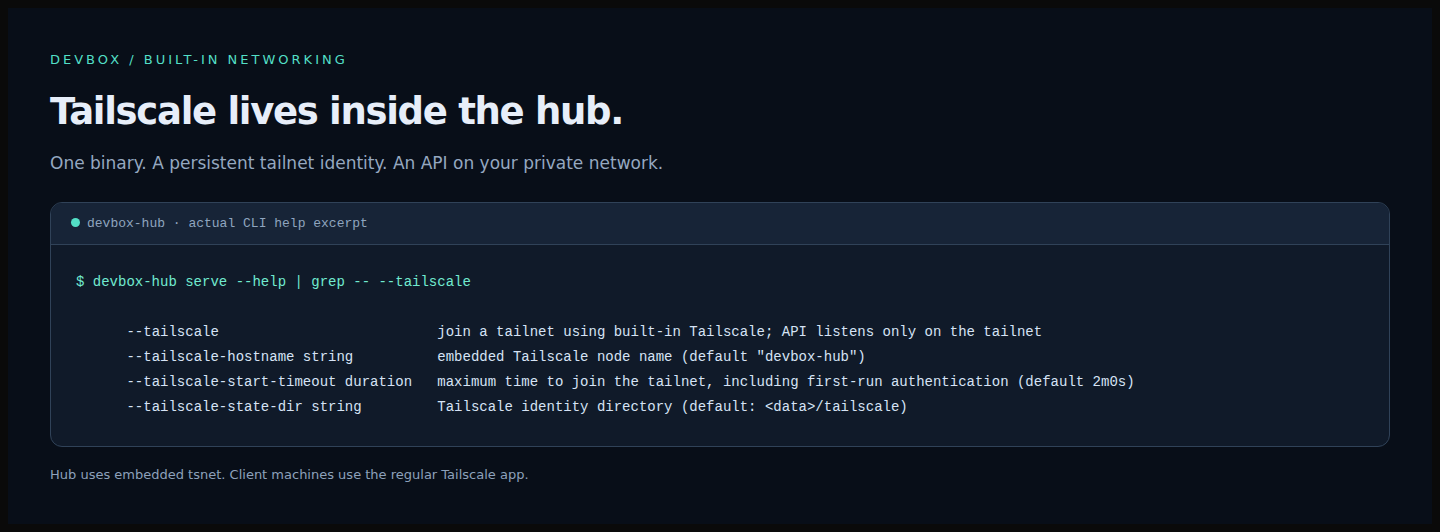
|
||||
|
||||
## MCP is built into the client
|
||||
|
||||
```bash
|
||||
codex mcp add devbox -- /absolute/path/to/devbox mcp
|
||||
```
|
||||
|
||||
The new `devbox mcp` command serves tools over local stdio. Inspect status,
|
||||
diagnostics, conflicts, history, and memberships by default. Enable pause,
|
||||
resume, publish, and mount with `--allow-writes`. Restore, deploy, and unmount
|
||||
also require `--allow-destructive`. The server uses the enrolled device's
|
||||
existing config and connection, including access to Tailscale hubs.
|
||||
|
||||
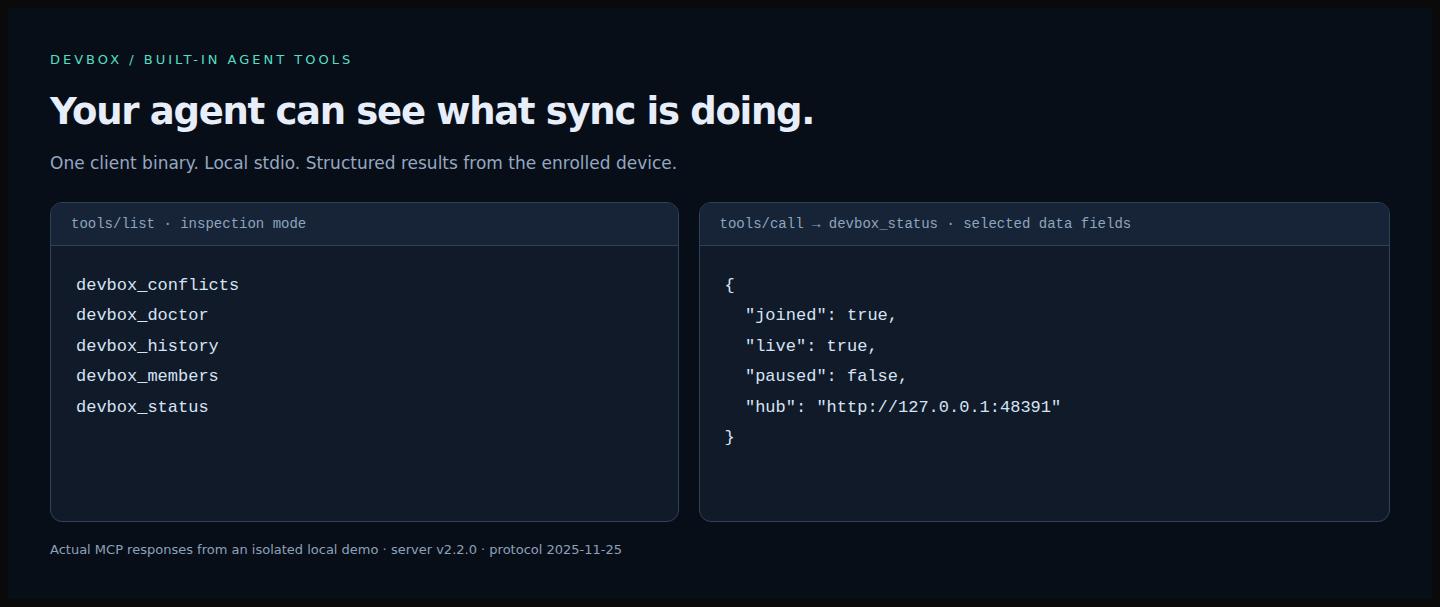
|
||||
|
||||
See the [MCP guide](https://github.com/shoemoney/devbox/blob/main/docs/MCP.md)
|
||||
for configuration examples and tool details. No separate MCP package or Node
|
||||
runtime is needed. Start the sync daemon separately with `devbox start`.
|
||||
|
||||
## Install
|
||||
|
||||
```bash
|
||||
curl -fsSL https://git.shoemoney.ai/shoemoney/devbox-dist/releases/download/latest/install.sh | sh
|
||||
```
|
||||
|
||||
For the hub too, download the installer and run `sh install.sh --hub --no-service`.
|
||||
Both binaries ship for Linux amd64/arm64/arm, macOS amd64/arm64, and Windows amd64.
|
||||
`SHA256SUMS` covers the 12 binaries and both installers. Public downloads are
|
||||
available on GitHub and Forgejo. Source builds require Go 1.27.4+.
|
||||
|
||||
## Validation
|
||||
|
||||
Passed vet, 189 race tests across 19 packages, and real SDK stdio tests for
|
||||
initialization, discovery, calls, permissions, authenticated hub operations,
|
||||
input validation, cancellation, timeouts, and output caps. The embedded Tailscale
|
||||
regression uses real nodes against an isolated local control/DERP plane; no
|
||||
production-tailnet enrollment is claimed.
|
||||
|
||||
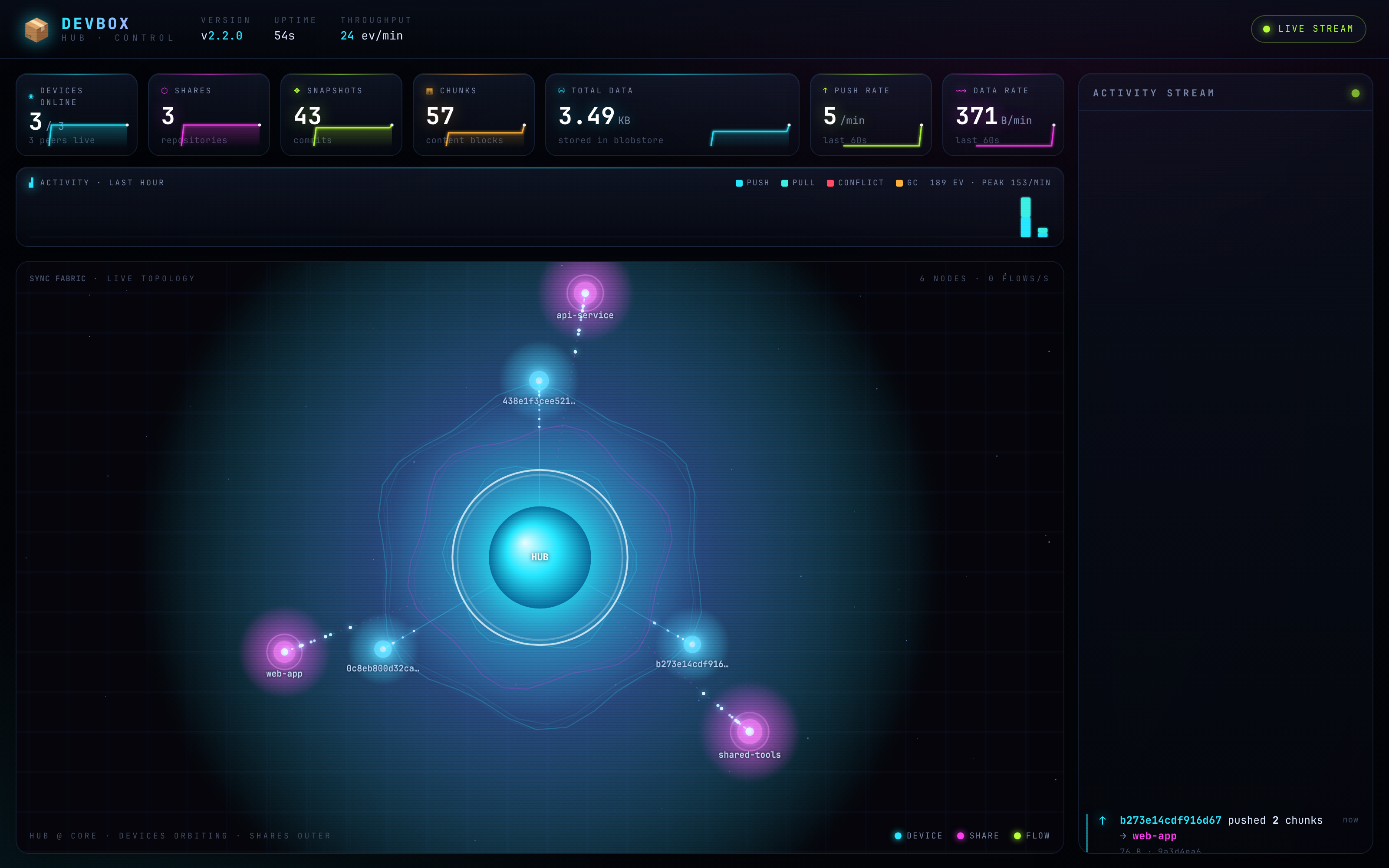
|
||||
|
||||
The dashboard capture uses a local demo hub and real sync daemons. It is not a
|
||||
production-tailnet capture.
|
||||
5
go.mod
5
go.mod
|
|
@ -6,6 +6,7 @@ require (
|
|||
github.com/BurntSushi/toml v1.6.0
|
||||
github.com/fsnotify/fsnotify v1.10.1
|
||||
github.com/jotfs/fastcdc-go v0.2.0
|
||||
github.com/modelcontextprotocol/go-sdk v1.8.0
|
||||
github.com/spf13/cobra v1.10.2
|
||||
github.com/zeebo/blake3 v0.2.4
|
||||
golang.org/x/time v0.16.0
|
||||
|
|
@ -57,6 +58,7 @@ require (
|
|||
github.com/google/btree v1.1.3 // indirect
|
||||
github.com/google/go-cmp v0.7.0 // indirect
|
||||
github.com/google/go-tpm v0.9.8 // indirect
|
||||
github.com/google/jsonschema-go v0.4.3 // indirect
|
||||
github.com/google/nftables v0.3.0 // indirect
|
||||
github.com/google/uuid v1.6.0 // indirect
|
||||
github.com/hdevalence/ed25519consensus v0.2.0 // indirect
|
||||
|
|
@ -82,6 +84,8 @@ require (
|
|||
github.com/pkg/sftp v1.13.11 // indirect
|
||||
github.com/remyoudompheng/bigfft v0.0.0-20230129092748-24d4a6f8daec // indirect
|
||||
github.com/safchain/ethtool v0.7.0 // indirect
|
||||
github.com/segmentio/asm v1.1.3 // indirect
|
||||
github.com/segmentio/encoding v0.5.4 // indirect
|
||||
github.com/spf13/pflag v1.0.10 // indirect
|
||||
github.com/tailscale/certstore v0.1.1-0.20260409135935-3638fb84b77d // indirect
|
||||
github.com/tailscale/gliderssh v0.3.4-0.20261026144310-31f7cf365d3a // indirect
|
||||
|
|
@ -97,6 +101,7 @@ require (
|
|||
github.com/u-root/uio v0.0.0-20240224005618-d2acac8f3701 // indirect
|
||||
github.com/vishvananda/netns v0.0.5 // indirect
|
||||
github.com/x448/float16 v0.8.4 // indirect
|
||||
github.com/yosida95/uritemplate/v3 v3.0.2 // indirect
|
||||
go4.org/mem v0.0.0-20240501181205-ae6ca9944745 // indirect
|
||||
go4.org/netipx v0.0.0-20260823151212-3075585bcbeb // indirect
|
||||
golang.org/x/crypto v0.59.0 // indirect
|
||||
|
|
|
|||
12
go.sum
12
go.sum
|
|
@ -97,6 +97,8 @@ github.com/go4org/plan9netshell v0.0.0-20250324183649-788daa080737 h1:cf60tHxREO
|
|||
github.com/go4org/plan9netshell v0.0.0-20250324183649-788daa080737/go.mod h1:MIS0jDzbU/vuM9MC4YnBITCv+RYuTRq8dJzmCrFsK9g=
|
||||
github.com/godbus/dbus/v5 v5.2.2 h1:TUR3TgtSVDmjiXOgAAyaZbYmIeP3DPkld3jgKGV8mXQ=
|
||||
github.com/godbus/dbus/v5 v5.2.2/go.mod h1:3AAv2+hPq5rdnr5txxxRwiGjPXamgoIHgz9FPBfOp3c=
|
||||
github.com/golang-jwt/jwt/v5 v5.3.1 h1:kYf81DTWFe7t+1VvL7eS+jKFVWaUnK9cB1qbwn63YCY=
|
||||
github.com/golang-jwt/jwt/v5 v5.3.1/go.mod h1:fxCRLWMO43lRc8nhHWY6LGqRcf+1gQWArsqaEUEa5bE=
|
||||
github.com/golang/groupcache v0.0.0-20241129210726-2c02b8208cf8 h1:f+oWsMOmNPc8JmEHVZIycC7hBoQxHH9pNKQORJNozsQ=
|
||||
github.com/golang/groupcache v0.0.0-20241129210726-2c02b8208cf8/go.mod h1:wcDNUvekVysuuOpQKo3191zZyTpiI6se1N1ULghS0sw=
|
||||
github.com/google/btree v1.1.3 h1:CVpQJjYgC4VbzxeGVHfvZrv1ctoYCAI8vbl07Fcxlyg=
|
||||
|
|
@ -107,6 +109,8 @@ github.com/google/go-tpm v0.9.8 h1:slArAR9Ft+1ybZu0lBwpSmpwhRXaa85hWtMinMyRAWo=
|
|||
github.com/google/go-tpm v0.9.8/go.mod h1:h9jEsEECg7gtLis0upRBQU+GhYVH6jMjrFxI8u6bVUY=
|
||||
github.com/google/go-tpm-tools v0.3.13-0.20230620182252-4639ecce2aba h1:qJEJcuLzH5KDR0gKc0zcktin6KSAwL7+jWKBYceddTc=
|
||||
github.com/google/go-tpm-tools v0.3.13-0.20230620182252-4639ecce2aba/go.mod h1:EFYHy8/1y2KfgTAsx7Luu7NGhoxtuVHnNo8jE7FikKc=
|
||||
github.com/google/jsonschema-go v0.4.3 h1:/DBOLZTfDow7pe2GmaJNhltueGTtDKICi8V8p+DQPd0=
|
||||
github.com/google/jsonschema-go v0.4.3/go.mod h1:r5quNTdLOYEz95Ru18zA0ydNbBuYoo9tgaYcxEYhJVE=
|
||||
github.com/google/nftables v0.3.0 h1:bkyZ0cbpVeMHXOrtlFc8ISmfVqq5gPJukoYieyVmITg=
|
||||
github.com/google/nftables v0.3.0/go.mod h1:BCp9FsrbF1Fn/Yu6CLUc9GGZFw/+hsxfluNXXmxBfRM=
|
||||
github.com/google/pprof v0.0.0-20250317173921-a4b03ec1a45e h1:ijClszYn+mADRFY17kjQEVQ1XRhq2/JR1M3sGqeJoxs=
|
||||
|
|
@ -162,6 +166,8 @@ github.com/miekg/dns v1.1.73 h1:uhT8nJxmTrPJYClxVxTCX+CVn6qnzSiybRk72Z6DgrE=
|
|||
github.com/miekg/dns v1.1.73/go.mod h1:RW2Obtfd5NZHvOFe3zYG0W8koWOQtAzyHaLo8vASBuQ=
|
||||
github.com/mitchellh/go-ps v1.0.0 h1:i6ampVEEF4wQFF+bkYfwYgY+F/uYJDktmvLPf7qIgjc=
|
||||
github.com/mitchellh/go-ps v1.0.0/go.mod h1:J4lOc8z8yJs6vUwklHw2XEIiT4z4C40KtWVN3nvg8Pg=
|
||||
github.com/modelcontextprotocol/go-sdk v1.8.0 h1:KIvahhYqwtbeniWVPs3TcXEA7b8jEtwfBpOTAI+Urx4=
|
||||
github.com/modelcontextprotocol/go-sdk v1.8.0/go.mod h1:dL7u98E/zjJTGzEq+j30jQ8K2k1mb6LeAH4inEcSGts=
|
||||
github.com/munnerz/goautoneg v0.0.0-20191010083416-a7dc8b61c822 h1:C3w9PqII01/Oq1c1nUAm88MOHcQC9l5mIlSMApZMrHA=
|
||||
github.com/munnerz/goautoneg v0.0.0-20191010083416-a7dc8b61c822/go.mod h1:+n7T8mK8HuQTcFwEeznm/DIxMOiR9yIdICNftLE1DvQ=
|
||||
github.com/ncruces/go-strftime v1.0.0 h1:HMFp8mLCTPp341M/ZnA4qaf7ZlsbTc+miZjCLOFAw7w=
|
||||
|
|
@ -185,6 +191,10 @@ github.com/rogpeppe/go-internal v1.16.0/go.mod h1:DrUVZyrJU+txYW5/1kwtXQSMFio52Z
|
|||
github.com/russross/blackfriday/v2 v2.1.0/go.mod h1:+Rmxgy9KzJVeS9/2gXHxylqXiyQDYRxCVz55jmeOWTM=
|
||||
github.com/safchain/ethtool v0.7.0 h1:rlJzfDetsVvT61uz8x1YIcFn12akMfuPulHtZjtb7Is=
|
||||
github.com/safchain/ethtool v0.7.0/go.mod h1:MenQKEjXdfkjD3mp2QdCk8B/hwvkrlOTm/FD4gTpFxQ=
|
||||
github.com/segmentio/asm v1.1.3 h1:WM03sfUOENvvKexOLp+pCqgb/WDjsi7EK8gIsICtzhc=
|
||||
github.com/segmentio/asm v1.1.3/go.mod h1:Ld3L4ZXGNcSLRg4JBsZ3//1+f/TjYl0Mzen/DQy1EJg=
|
||||
github.com/segmentio/encoding v0.5.4 h1:OW1VRern8Nw6ITAtwSZ7Idrl3MXCFwXHPgqESYfvNt0=
|
||||
github.com/segmentio/encoding v0.5.4/go.mod h1:HS1ZKa3kSN32ZHVZ7ZLPLXWvOVIiZtyJnO1gPH1sKt0=
|
||||
github.com/spf13/cobra v1.10.2 h1:DMTTonx5m65Ic0GOoRY2c16WCbHxOOw6xxezuLaBpcU=
|
||||
github.com/spf13/cobra v1.10.2/go.mod h1:7C1pvHqHw5A4vrJfjNwvOdzYu0Gml16OCs2GRiTUUS4=
|
||||
github.com/spf13/pflag v1.0.9/go.mod h1:McXfInJRrz4CZXVZOBLb0bTZqETkiAhM9Iw0y3An2Bg=
|
||||
|
|
@ -229,6 +239,8 @@ github.com/vishvananda/netns v0.0.5 h1:DfiHV+j8bA32MFM7bfEunvT8IAqQ/NzSJHtcmW5zd
|
|||
github.com/vishvananda/netns v0.0.5/go.mod h1:SpkAiCQRtJ6TvvxPnOSyH3BMl6unz3xZlaprSwhNNJM=
|
||||
github.com/x448/float16 v0.8.4 h1:qLwI1I70+NjRFUR3zs1JPUCgaCXSh3SW62uAKT1mSBM=
|
||||
github.com/x448/float16 v0.8.4/go.mod h1:14CWIYCyZA/cWjXOioeEpHeN/83MdbZDRQHoFcYsOfg=
|
||||
github.com/yosida95/uritemplate/v3 v3.0.2 h1:Ed3Oyj9yrmi9087+NczuL5BwkIc4wvTb5zIM+UJPGz4=
|
||||
github.com/yosida95/uritemplate/v3 v3.0.2/go.mod h1:ILOh0sOhIJR3+L/8afwt/kE++YT040gmv5BQTMR2HP4=
|
||||
github.com/zeebo/assert v1.1.0 h1:hU1L1vLTHsnO8x8c9KAR5GmM5QscxHg5RNU5z5qbUWY=
|
||||
github.com/zeebo/assert v1.1.0/go.mod h1:Pq9JiuJQpG8JLJdtkwrJESF0Foym2/D9XMU5ciN/wJ0=
|
||||
github.com/zeebo/blake3 v0.2.4 h1:KYQPkhpRtcqh0ssGYcKLG1JYvddkEA8QwCM/yBqhaZI=
|
||||
|
|
|
|||
18
scripts/mcp-smoke.sh
Executable file
18
scripts/mcp-smoke.sh
Executable file
|
|
@ -0,0 +1,18 @@
|
|||
#!/usr/bin/env bash
|
||||
# Run the real SDK stdio integration checks against a native packaged binary.
|
||||
# Requires the repository's Go toolchain; never uses the caller's devbox config.
|
||||
set -euo pipefail
|
||||
if [[ $# -ne 1 ]]; then
|
||||
echo "usage: $0 /absolute/path/to/devbox" >&2
|
||||
exit 2
|
||||
fi
|
||||
case "$1" in
|
||||
/*) ;;
|
||||
*) echo "binary path must be absolute" >&2; exit 2 ;;
|
||||
esac
|
||||
if [[ ! -x "$1" ]]; then
|
||||
echo "binary is not executable: $1" >&2
|
||||
exit 2
|
||||
fi
|
||||
cd "$(dirname "$0")/.."
|
||||
DEVBOX_MCP_TEST_BINARY="$1" go test ./cmd/devbox -run '^TestMCPStdio$' -count=1 -v
|
||||
Loading…
Reference in a new issue