
2.6 KiB
v2.2.0 — Built-in MCP + Tailscale
Your working tree on every machine. Structured sync tools for your coding agent.
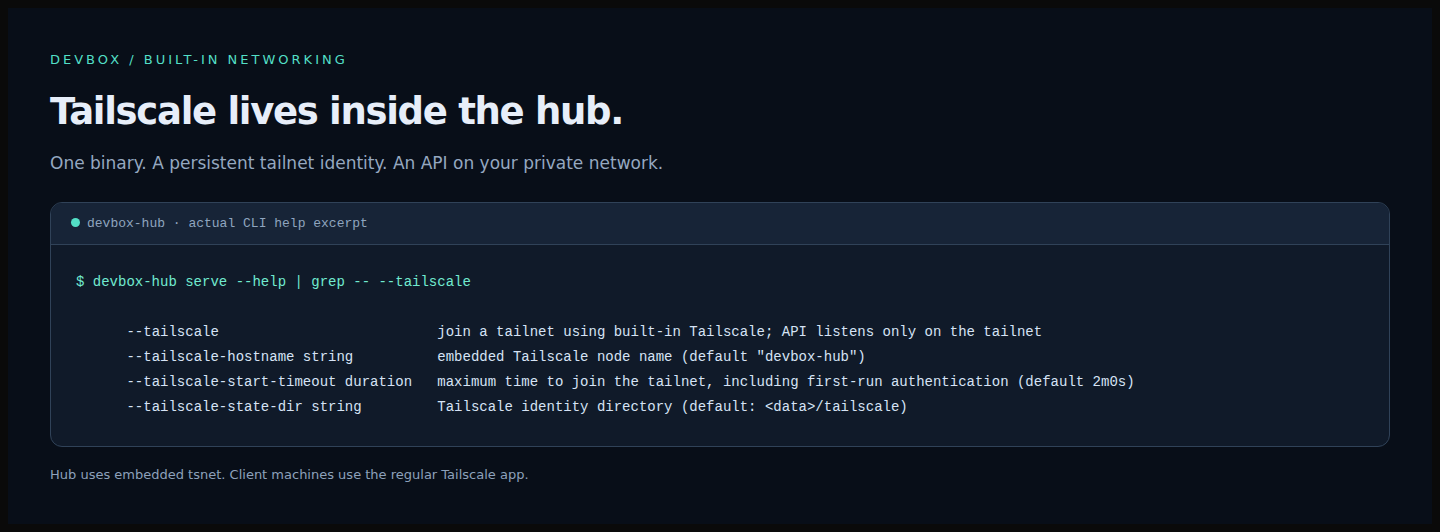
Tailscale is built into the hub
devbox-hub serve --data ./hub-data --tailscale --tailscale-hostname devbox-hub
The hub joins your tailnet itself, without a separate Tailscale installation,
root privileges, TUN device, router port forwarding, or reverse proxy. Enroll
using the first-run login URL or a securely supplied TS_AUTHKEY; preserve
<data>/tailscale across upgrades. Clients use the regular Tailscale app and
the private endpoint printed by the hub. Devbox join tokens remain required.
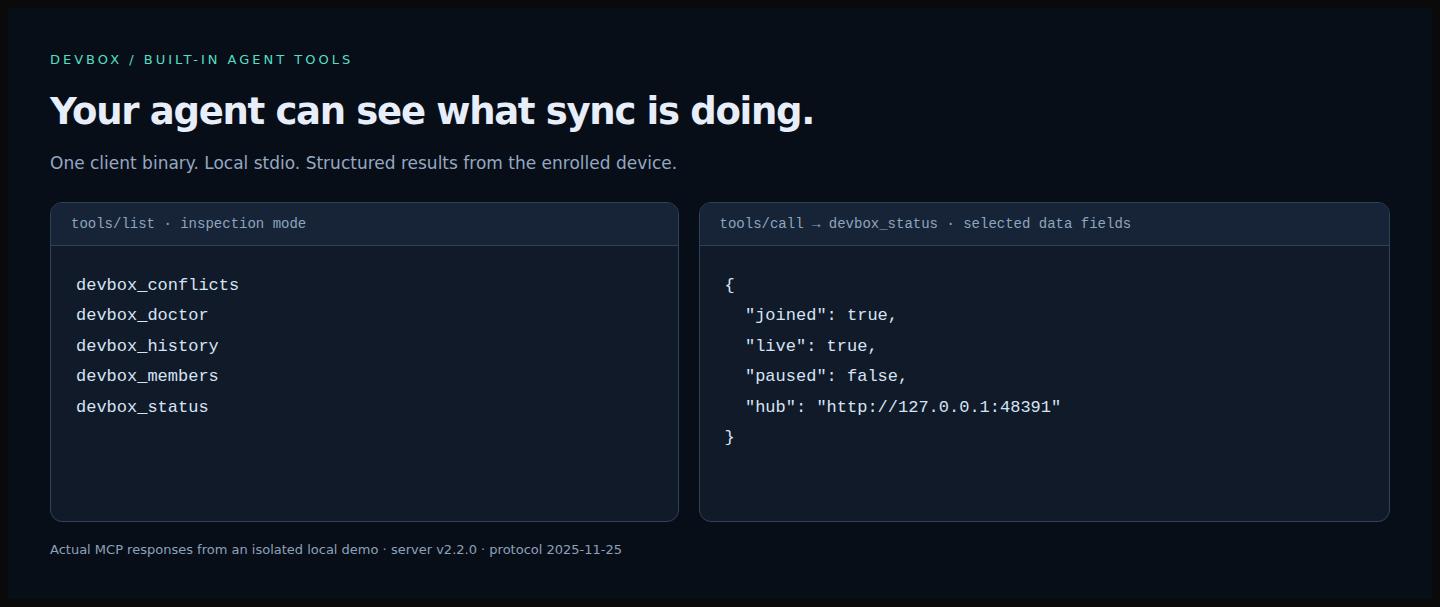
MCP is built into the client
codex mcp add devbox -- /absolute/path/to/devbox mcp
The new devbox mcp command serves tools over local stdio. Inspect status,
diagnostics, conflicts, history, and memberships by default. Enable pause,
resume, publish, and mount with --allow-writes. Restore, deploy, and unmount
also require --allow-destructive. The server uses the enrolled device's
existing config and connection, including access to Tailscale hubs.
See the MCP guide
for configuration examples and tool details. No separate MCP package or Node
runtime is needed. Start the sync daemon separately with devbox start.
Install
curl -fsSL https://git.shoemoney.ai/shoemoney/devbox-dist/releases/download/latest/install.sh | sh
For the hub too, download the installer and run sh install.sh --hub --no-service.
Both binaries ship for Linux amd64/arm64/arm, macOS amd64/arm64, and Windows amd64.
SHA256SUMS covers the 12 binaries and both installers. Public downloads are
available on GitHub and Forgejo. Source builds require Go 1.27.4+.
Validation
Passed vet, 189 race tests across 19 packages, and real SDK stdio tests for initialization, discovery, calls, permissions, authenticated hub operations, input validation, cancellation, timeouts, and output caps. The embedded Tailscale regression uses real nodes against an isolated local control/DERP plane; no production-tailnet enrollment is claimed.
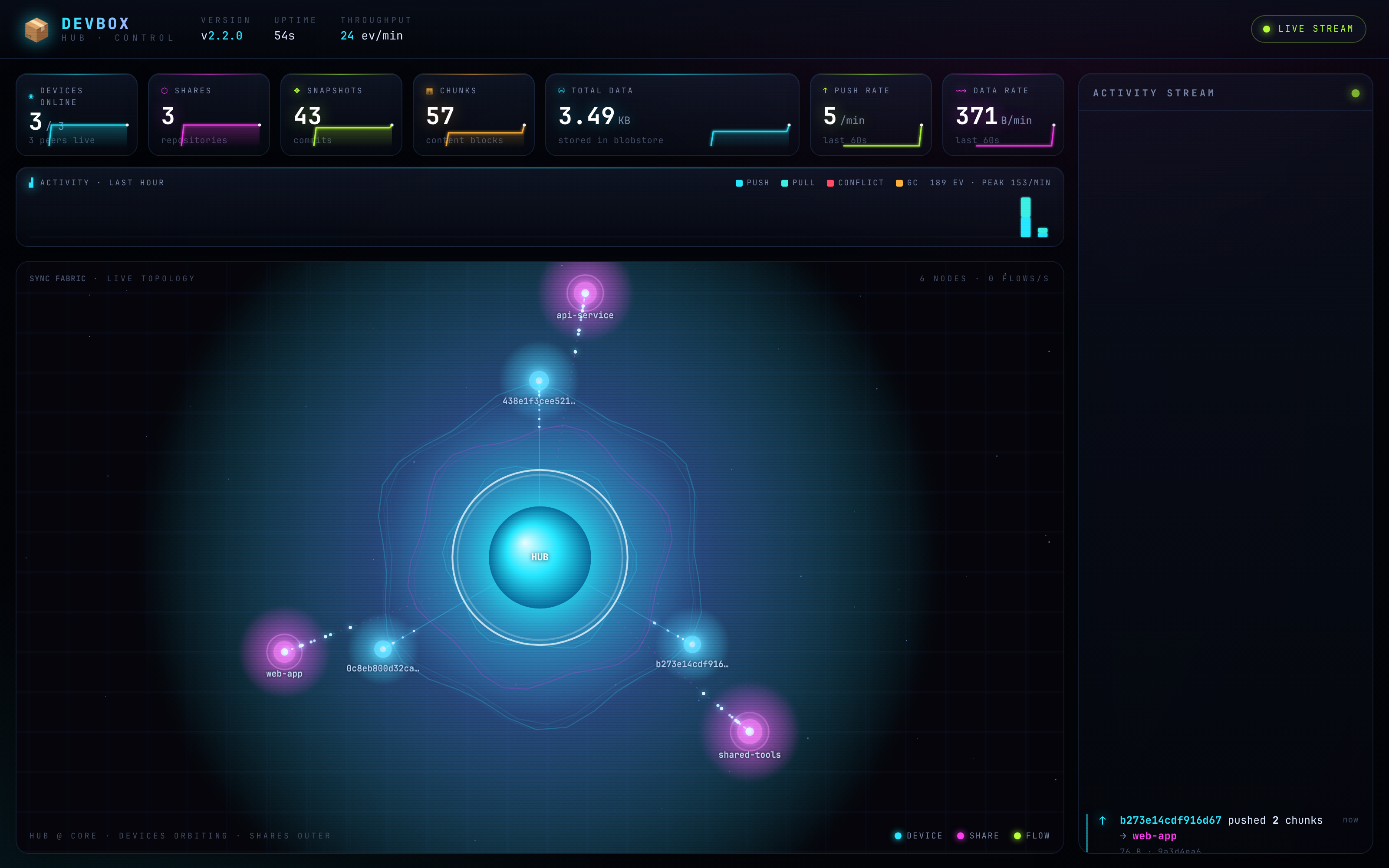
The dashboard capture uses a local demo hub and real sync daemons. It is not a production-tailnet capture.